User Spectrums
Created at Urban Jungle in 2022
Urban Jungle Insurance is an insurtech using technology to challenge an outdated industry. My role was to contribute to building a simple, fair, and affordable product with the best-in-class UX and UI.
Challenge: After spending time and resources building 2 user personas, these were not useful to the product team’s design process or the wider team’s understanding of our users.
Solution: Create a tool and process to help us design customer-first solutions and communicate our users' needs, frustrations and behaviours to the wider team and stakeholders.


Understanding the problem
Industry research:
To understand how and when personas work best, I talked to designers and read blogs from various companies. I noticed that putting a lot of resources into building personas that didn’t work was a very common problem!
I decided to send out a survey to ask other designers about their experience with personas, how useful they've found them and what other tools they use.

80%
Of designers used personas but only half rated them 5/5 usefulness
20%
Of designers had used personas in previous jobs/projects but no longer found them useful
66%
Had reservations against personas as the only tool to understand and represent users
Research takeaway
This research highlighted the importance of having unbiased tools and introduced me to alternative tools that could help us understand our users independently from their demographic data.
A tool I found particularly interesting was User Spectrums - this tool not only highlighted needs and pain points but also how these are different for each user types, unlike personas, this tool was built from user behaviour without generalising users.
Seeing Sarah W at Config 2022 (Figma's Product Design Conference) talk about how her team built user spectrums for Canyon inspired me to learn more and ultimately build User Spectrums for Urban Jungle!
User spectrums!
Building & Collaborating
Why user spectrums could help
Getting support from stakeholders and team input:
I presented my research to relevant team members and got their input to find the spectrums we could build.
I got stakeholders' support and access to more resources and cross-functional input by explaining how the spectrums could help us make user-centric decisions and allow us to be on the same page when it comes to our user's needs, pain points, and behaviors.
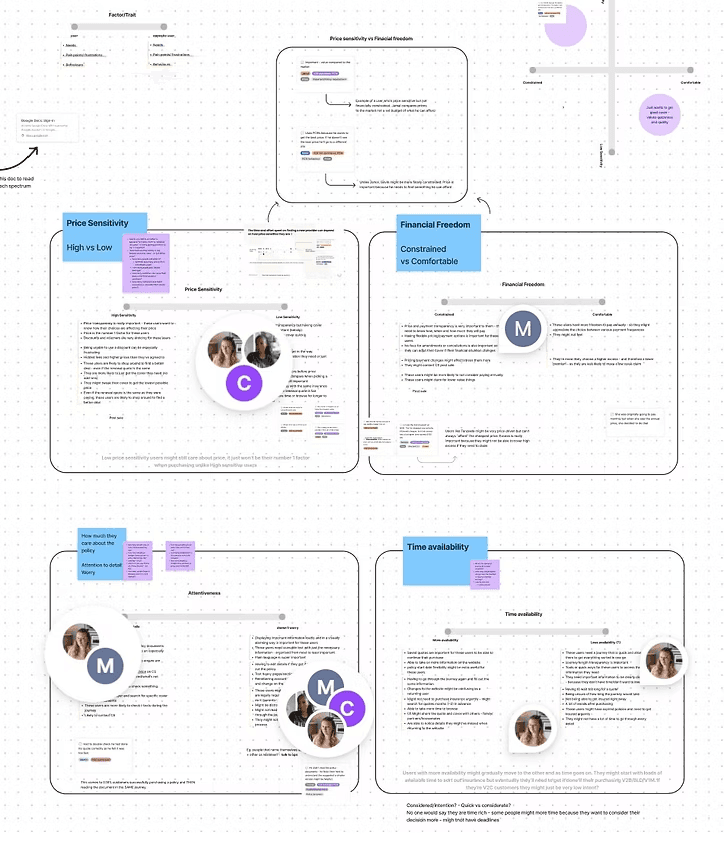
Finding our Spectrums
Using existing qualitative data
After trying to use quantitative research with the help of our data team, I realised this wasn't enough to find trends in behaviour and link these to needs and pain points. So I turned to the vast qualitative research we had from previous user interview projects. Talking to our customer operations team was super important to validate ideas and find the pain points for the users on the end of the spectrum.
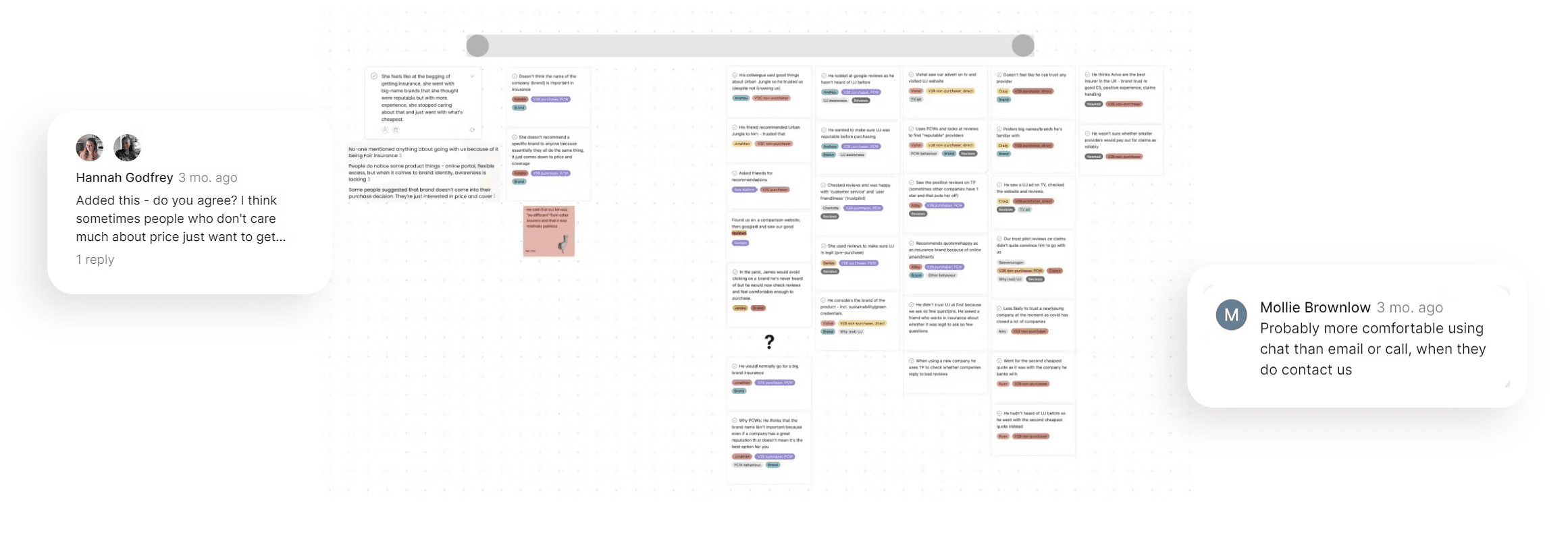
Finalising the UJ Spectrums
Incorporating and introducing the spectrums
After collecting qualitative research and collaborating with members from the product, customer operations and data team I was able to find the needs, pain points and behaviours of each end of all the spectrums. I was now time to think about how we could introduce this new tool to our processes and the wider company.
Here's what I did:

The impact
The spectrums exist. So what?
Since documenting, presenting and introducing the spectrums to our processes we've been able to improve a few things:
Better understanding of our users - we're able to identify and understand our users when researching and interviewing them.
User-centric design decisions - the tool helps us push and pull priorities while thinking about the users we want to target.
A flexible tool - we can keep feeding research and data back into the spectrums as we go and keep our user's needs, pain points and behaviours up-to-date
Language - everyone can now champion our users and communicate them clearly with the same terminology